Mitigation is the emergency phase that limits how much damage water is allowed to do - source stopped, water extracted, structure dried and stabilized, everything documented.
Water mitigation is the first phase of water damage restoration - the work that stops the water source, removes the water and dries the structure to limit further damage before any repairs begin.
On this page: what mitigation includes, the 5 steps in the order they happen, when you need it, how it differs from restoration, what delay costs you, and the questions Buford homeowners ask us first.
Water mitigation is the first phase of water damage restoration - the work that stops the water source, removes the water and dries the structure to limit further damage before any repairs begin.
It runs in four action groups: stop the source, extract the water, remove materials that cannot be saved, and dry and stabilize what remains. Mitigation ends at a specific point: when the structure is dry and stable. Everything after that point - repairs, rebuilding, finishes - is restoration, phase two.
We identify the source from your description and, where you can do it safely, walk you through shutting off the main valve on the call. On arrival, stopping the source comes before any extraction - no new water enters from this point.
We read moisture in walls, floors and ceilings, map the wet areas on a property plan, and photograph and document everything. The map decides where extraction and drying equipment go, and the photos and readings start your insurance file.
Standing water is extracted, deepest areas first, with pumps and extraction units. The full method lives on our emergency water extraction page; here the rule is simple: extraction completes before drying setup begins.
Porous materials that absorbed Category 2 or 3 water are removed. Clean-water materials are dried in place where readings allow. Salvageable contents are protected in place or packed out.
Air movers and dehumidifiers go in, readings are recorded daily, and the structure is stabilized at the verified dry standard - the end point of mitigation. The full method is on our structural drying page.
Active water entering the structure is a mitigation call while the water is still moving, not after it stops. Source control is step one.
Standing water anywhere in the property after heavy rain or flooding. Flood water is Category 3 black water, and extraction comes first.
Contaminated water inside means mitigation under a Category 3 safety order: keep people and pets out, and do not attempt household cleaning. The full treatment is on our sewage backup cleanup page.
A sudden release floods a room; a slow one wets subfloor and drywall for weeks before it is found. Both are mitigation - the slow failure is why moisture mapping exists.
If wet materials are dried within 24 to 48 hours after a leak or spill, the EPA's guidance is that in most cases mold will not grow. A recent loss is a mitigation loss at its most winnable.
Mitigation limits the damage; restoration repairs it. The table below is the whole system on one screen - and every full job in Buford runs both phases, in this order.
Take a burst pipe. Mitigation: the valve is closed, the water is extracted, the wet drywall base comes out, and the cavity is dried to a verified reading. Restoration: the drywall is replaced, taped, painted, and the room is a room again. A flood job follows the same arc with Category 3 rules. This is why our service list opens with mitigation and closes with reconstruction - they are the two ends of one job.
| Phase | Goal | Main Actions | When It Ends |
|---|---|---|---|
| Mitigation (Phase 1) | Limit the damage | Stop the source, extract water, remove unsalvageable materials, dry and stabilize | The structure is dry and stable |
| Restoration (Phase 2) | Repair the damage | Rebuild, replace removed materials, refinish | The property is back to pre-damage condition |
For any loss beyond a small, immediately dried spill: yes. Mitigation without restoration leaves the property dried but unrepaired. Restoration without mitigation is worse - repairs built over a wet structure trap moisture inside walls and floors, and the damage continues behind the new materials until the repair itself has to come out.
The one honest exception: a small Category 1 spill, on a surface, dried at once by the owner, may need neither. The moment water has entered a wall, a floor structure or a second room, the exception no longer applies.
Delay is not neutral - water damage runs on clocks, and all of them run against you:
Water spreads and materials absorb it. Drywall wicks moisture upward from its base; flooring and subfloor swell.
The EPA's prevention window closes - wet materials not dried inside it are the cases where mold grows. Standing clean water also degrades toward Category 2 in the same window.
Odor sets in. Category 2 water degrades toward Category 3. Framing and contents that would have dried in place become removal items.
Microbial growth and structural damage become the job. Remediation and reconstruction replace what simple drying would have handled.
Immediately. The first actions - stop the source, extract, start drying - happen on the first visit, inside the same 24 to 48 hour window the EPA gives for preventing mold growth.
Two clocks start the moment water escapes. The EPA clock: dry wet materials inside 24 to 48 hours and, in most cases, mold will not grow. The degradation clock: standing water worsens roughly one category in the same period. Night, weekend or holiday changes neither clock - which is why this service answers 24/7.
Extraction and source control are completed on the first visit in most residential losses. The drying and stabilization phase that follows typically takes 3 to 5 days for Class 1 and Class 2 clean-water losses, with readings recorded daily; Class 3 and Class 4 losses and dense materials take longer. Mitigation ends at the verified dry standard, not at a calendar date. Restoration time is a separate phase and is scoped separately.
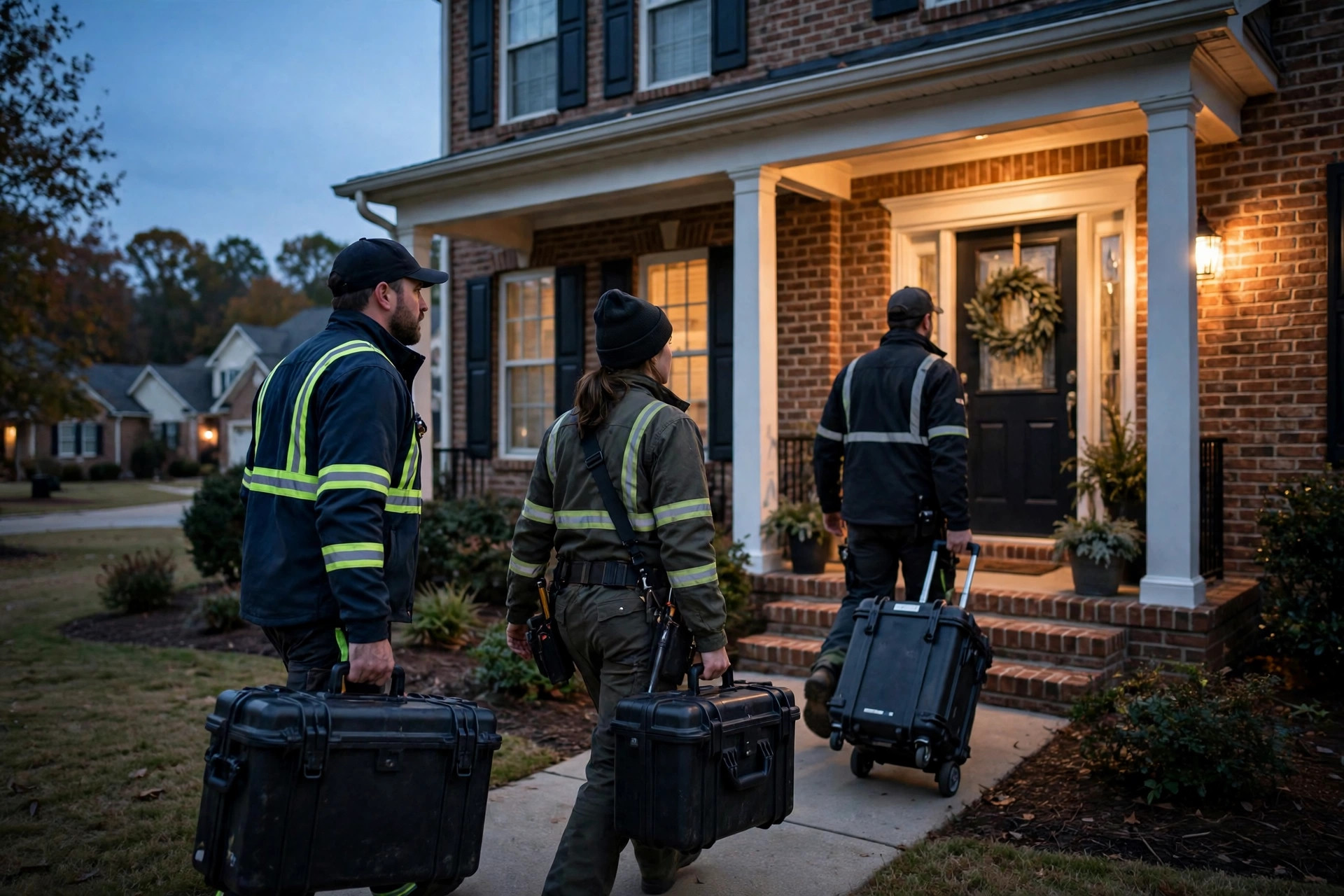
Mitigation is the emergency phase of a covered sudden-and-accidental loss, and insurers expect it - limiting further damage is the homeowner's part of the bargain. Coverage itself follows the standard rules: sudden events are generally covered, flood needs a separate flood policy, and gradual damage is generally not covered. Your carrier makes the decision; the photos, readings and written scope from our assessment are what the claim is built on. We never promise an approval.
No. Repairs built over a wet structure trap moisture inside the assembly, where mold and rot continue out of sight - and the new work eventually has to be removed to fix what was skipped. The only exception is the narrow one: a small clean-water spill, dried immediately and completely, that never entered the structure.
A water damage restoration company that performs mitigation - one call covers stopping the source, extraction and drying. Two exceptions come first: a plumber for a failed pipe that needs repair before the water can stay off, and emergency services or the power company where there is electrical danger or injury. For mitigation itself, call us at (470) 516-0618.
24/7 emergency response, every day of the year
Local Buford team for Gwinnett and Hall counties
One team from mitigation to final restoration
Drying verified by moisture readings and moisture mapping
Documentation prepared for your insurance claim
Clear next steps and updates at every stage
Based in Buford (ZIPs 30515, 30518, 30519), serving Gwinnett and Hall counties. The full service-area treatment is on the homepage.
If your Buford home or business needs water mitigation, one call starts the work today - (470) 516-0618.