Standing water removed on the first visit - deepest areas first, with pumps and extraction units matched to the surface. Water removal and water extraction are the same service; this page covers both names.
Emergency water extraction is the removal of standing water from a property using pumps and extraction units, performed immediately after a flood, burst pipe or appliance failure.
Extraction has one boundary every homeowner should know: it removes bulk water. It does not dry the structure - the moisture inside walls, floors and materials is removed by structural drying, which always follows extraction.
Emergency water extraction is the removal of standing water from a property using pumps and extraction units, performed immediately after a flood, burst pipe or appliance failure.
The market uses two names for this one service - water extraction and water removal - and this page answers to both. What counts is the result: no standing water, surfaces ready for drying, contents protected, and a moisture reading that tells the drying crew exactly where to work.
Before any equipment starts: the electrical check. The CDC rule governs this step - never turn power on or off, and never use an electric tool, while standing in water. If power cannot be reached dry, extraction waits for safe conditions. Safety outranks speed.
Extraction against a running source is wasted work. The main valve is shut, the appliance is stopped, or the entry point is covered - the same source-control discipline as mitigation step one.
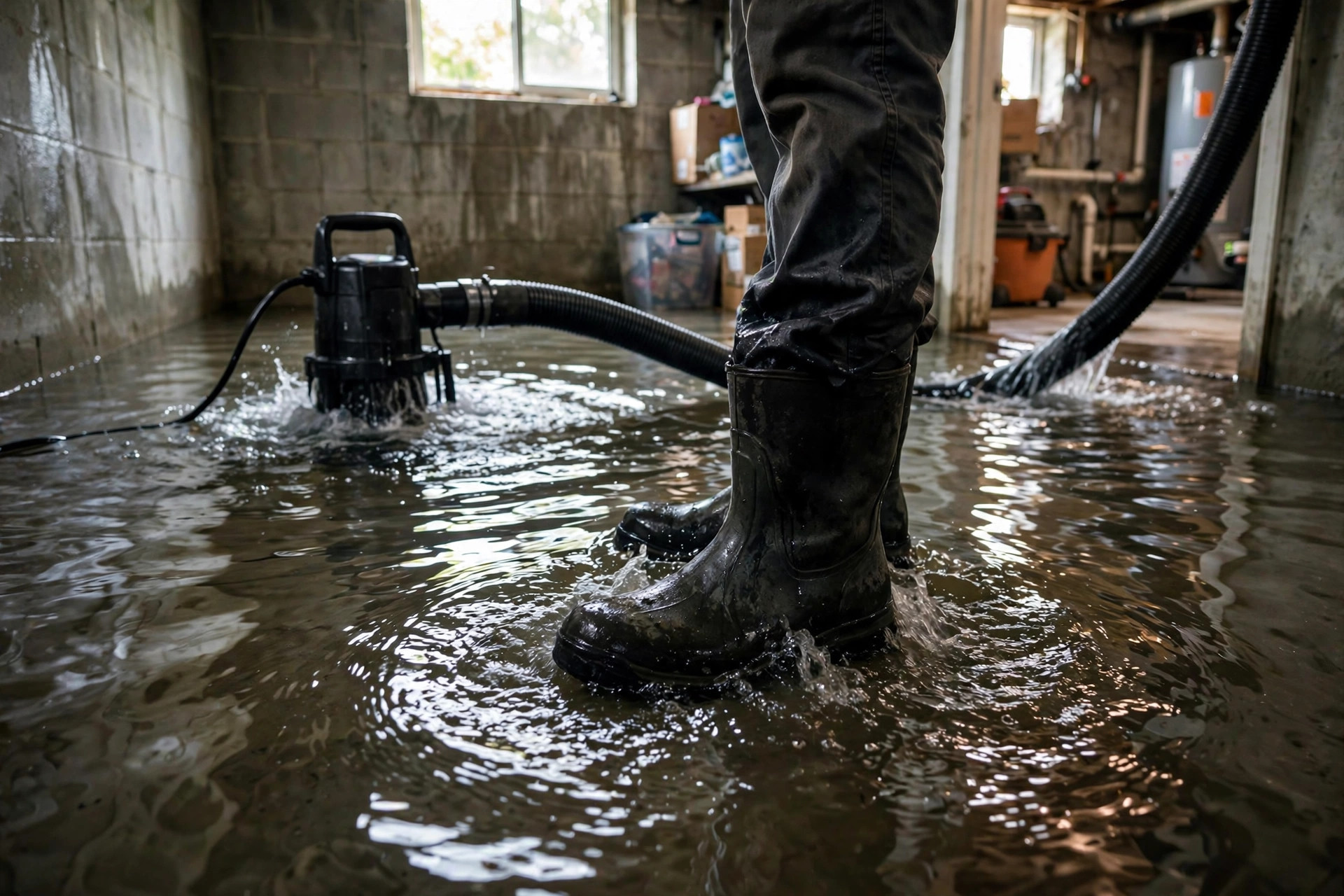
Deepest water first, with submersible pumps. Then extraction units work across the floors. Carpet and pad are extracted with weighted extraction where the pad will be dried in place - a Category 1 option only; Category 2 and 3 pads are removed.
Contents are moved and protected, and unsalvageable porous materials that block extraction - saturated contaminated pad, debris - come out. The structure is left clear and ready for drying.
Extraction ends with readings. Moisture measurements place the drying equipment, because extraction hands over to structural drying at a reading - not at a guess.
Standing water in the lowest space of the home. Extraction is the first action, before any drying or cleanup decision is made.
Active flooding from a failed pipe: source stopped, then extraction. The cause-side treatment is on our burst pipe cleanup page.
Rain or rising water indoors is Category 3 handling from the first minute. The contaminant treatment belongs to flood damage cleanup; extraction follows its safety order.
A room-scale release from a failed appliance or hose - the most common first-visit extraction in Buford homes.
Category 3 with the full safety order. Sewage extraction is performed as part of sewage backup cleanup, never as ordinary water removal.
Three equipment classes do the work. Each has a job and a limit, and the order they are used in is the order below.
Pumps move bulk water out of basements and flooded rooms so surface extraction can begin. A pump removes depth, not surface moisture - which is why pumps always go first and units second.
Truck-mounted units handle large volumes and whole-home losses; portable units serve upper floors, tight access and smaller rooms. One class, two instances - chosen by the building, not by preference.
Weighted extraction presses water out of carpet and pad together. The pad's fate follows the category rule: Category 1 pads may be dried in place; Category 2 and 3 pads are removed.
The surface decides the method - and what happens next.
| Surface | Extraction Method | What Happens Next |
|---|---|---|
| Carpet and pad | Weighted extraction across the surface | Dried in place (Category 1) or pad removed (Category 2/3), then structural drying |
| Hardwood floors | Surface extraction | Specialty drying - hardwood holds bound water (Class 4) and is decided by readings |
| Tile and concrete | Extraction and surface drying | Fastest class - verified by meter, then released |
| Drywall bases and wall cavities | Extraction cannot reach inside walls | Moisture readings decide drying or opening - see moisture detection |
Extraction is completed during the first visit in most residential losses. The visit lasts as long as the water volume requires - a single room is a different job from a whole flooded floor.
Four variables stretch it, in order: the volume and depth of water, the size of the affected area, the category (Category 3 adds safety and removal time), and access. We do not quote fixed hours for a first visit, because the water sets the clock - not the schedule.
The structure is still wet inside its materials. Structural drying - typically 3 to 5 days for Class 1 and Class 2 clean-water losses, with daily readings and a meter-verified dry standard - removes the bound moisture extraction cannot reach. Extraction is one step inside the mitigation phase, not the whole job.
As soon as it is found. Standing water runs on two clocks: the EPA's 24 to 48 hour window for drying wet materials before mold grows in most cases, and the degradation clock that worsens standing water by roughly a category in the same window. The first visit handles the removal - which is why the service runs 24/7.
The standing and surface water, yes - extraction removes it. The moisture bound in the pad and subfloor is removed by drying, not extraction, and the pad itself follows the category rule: Category 1 pads can be dried in place and verified; Category 2 and 3 pads are removed.
It is replaced when the water was Category 2 or 3, or when the pad stayed wet beyond the drying window. A Category 1 pad, extracted and dried in place, can be kept when readings verify it dry. The category - not opinion - makes the decision.
24/7 emergency response, every day of the year
Local Buford team for Gwinnett and Hall counties
One team from mitigation to final restoration
Drying verified by moisture readings and moisture mapping
Documentation prepared for your insurance claim
Clear next steps and updates at every stage
Based in Buford (ZIPs 30515, 30518, 30519), serving Gwinnett and Hall counties. The full service-area treatment is on the homepage.
If your Buford home or business needs emergency water extraction, one call starts the work today - (470) 516-0618.