Home › Storm Damage Restoration
Storm Damage Water Restoration in Buford, GA
The first job after a storm is stopping the water: tarping and board-up at the opening. Then extraction, drying and documented restoration - in that order, day or night.
The first job after a storm is stopping the water: tarping and board-up at the opening. Then extraction, drying and documented restoration - in that order, day or night.
Storm damage restoration is the emergency covering, water removal, drying and repair preparation performed after wind, hail or heavy rain damages a property and lets water in.
This page keeps an honest scope: it covers storm water damage and the emergency covering that stops it. Roof replacement and standing-tree removal are separate trades, and they are named as such where they belong - because a page that is honest about its boundaries can be trusted about its readings.
Storm damage restoration is the emergency covering, water removal, drying and repair preparation performed after wind, hail or heavy rain damages a property and lets water in.
Georgia's storms deliver a large share of the metro's 49.74 inches of annual rain in a small number of violent hours. The water that follows enters from above - through damaged roofs, lifted flashing and broken glazing - and the restoration discipline is built for exactly that entry pattern.
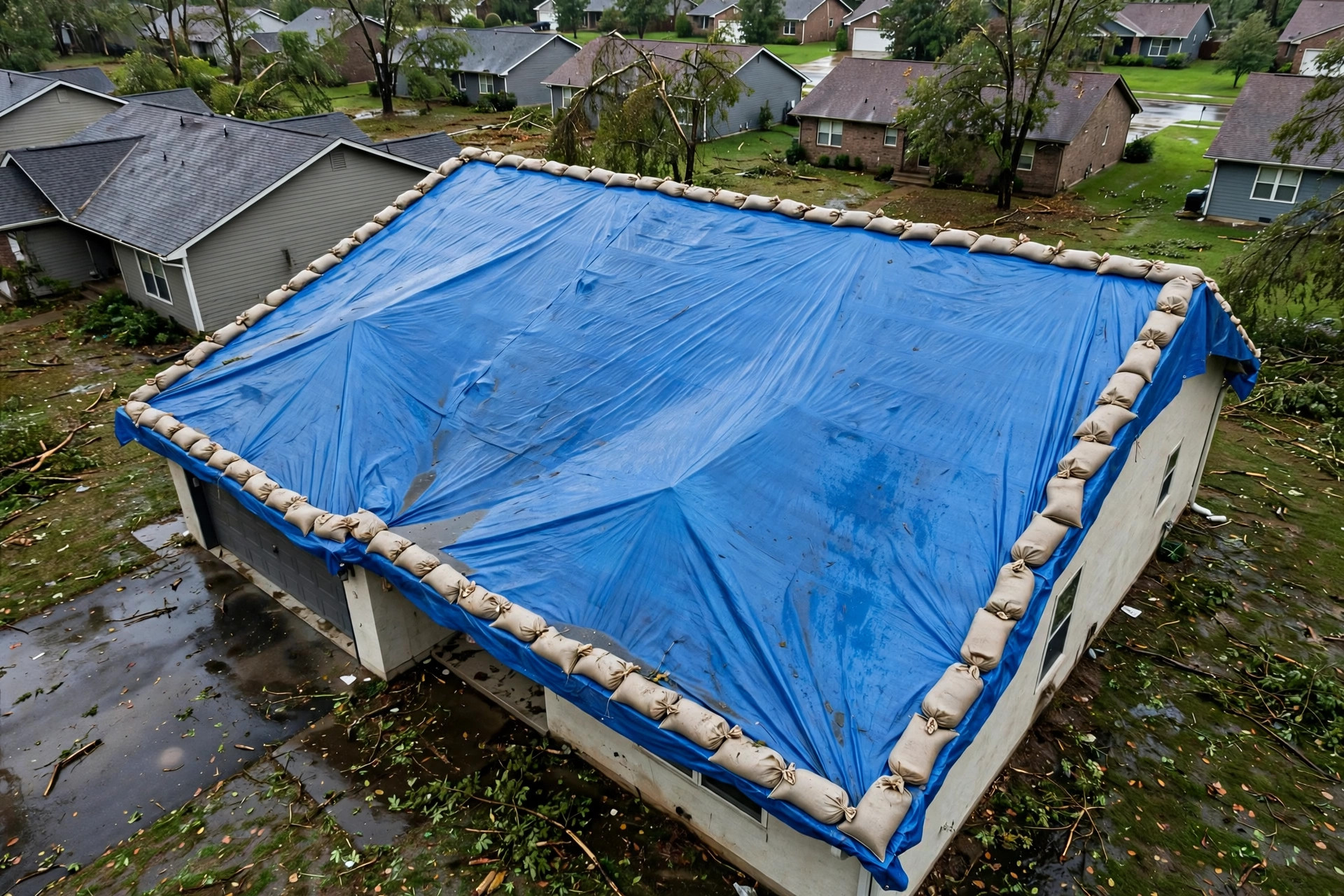
Damaged roof sections are tarped and broken windows and doors are boarded, so water entry stops before anything else happens. A tarp is a weather-tight temporary cover that protects the interior until permanent roof repair - stated as its purpose, never oversold as the repair itself.
Downed lines and structural damage are checked first - never approach a downed line, and never enter under a sagging, water-loaded ceiling. Then dated photos of the roof, the openings and the interior damage, before cleanup moves anything. Storm claims are documentation claims.
Storm water spreads across multiple rooms and levels from entry points above - a Class 3 pattern where ceilings saturate. The full method is on our emergency water extraction page.
Storm debris and water-damaged materials come out of the property. Fallen limbs on the structure are cleared as part of making it safe and dry; standing tree work and stump removal belong to tree services, and we say so once, plainly.
Drying follows the entry map - roof path, ceilings, walls, floors - with daily readings to the verified dry standard.
With the property covered, dry and documented, permanent roof repair and interior reconstruction proceed from the written scope. Interior repairs wait for a weather-tight roof; that dependency is a rule, not a preference.
Missing shingles and lifted flashing turn the next rain into ceiling and wall water. The roof either sheds the storm or invites it in.
Impact openings need tarping immediately, then the water work. Debris on the structure is cleared as part of the job; the standing tree is a tree service's work.
Wind-driven rain enters horizontally through broken glazing, wetting floors and wall bases across the storm-facing rooms. Board-up is the answering act.
When heavy rain raises water that enters at ground level, the flood page's Category 3 discipline takes over - flood damage cleanup owns that water.
Storefronts, roofing and trading hours: the commercial treatment is on our commercial water damage restoration page.
Storm stress scrambles priorities. This is the order that protects the property - phases, not promises:
Downed lines, structural damage, shut-offs. Nothing in the property is worth an injury in the first hour.
Tarping and board-up stop the water. Every hour the property stands open is more interior damage - the mechanism is that simple, and it is why covering outranks cleanup.
Photos and readings while the evidence is fresh, and extraction of the water already inside.
Daily readings on the standard ranges, until every material verifies dry.
Roof replacement by the roofing trade and interior reconstruction, both from the documented scope.
The Insurance Information Institute's doctrine sorts water by direction. Storm water in this network arrives top-down - through a damaged roof, broken windows, wind-driven rain - and that is the class homeowners policies generally address. Flood water arrives bottom-up, as rising ground water, and that class is excluded from homeowners policies and covered only by separate flood insurance.
One storm can produce both in the same house. The documentation from step two is written to separate them room by room - which direction the water came from is a fact the photos and readings establish, not an argument made later. The full flood definition lives on the flood page; here, the direction is the point.
Stay clear of downed lines and sagging ceilings. Photograph the damage from safe positions. Do not climb on a wet, damaged roof - tarping is crew work with safety equipment, and that line is not negotiable. Shut off water or power where the damage requires it and it is safe to do so, under the CDC's conditions. Then call for covering and extraction.
Five actions, safety first. The canonical first-steps list for water damage generally is in the questions on our homepage; this is its storm telling.
Covering and extraction begin on the emergency visit. Drying runs the standard ranges - typically 3 to 5 days for Class 1 and 2 portions, longer for Class 3 overhead saturation. Permanent roof repair and interior reconstruction follow verified dry readings, on those trades' schedules, and are not promised here. The variable that decides the whole timeline: how long the property stood open to the weather before it was covered.
Generally, damage from the storm event itself - wind that damaged the roof, rain that entered through the storm's opening - is the sudden-event pattern homeowners policies address: top-down water. Rising flood water from the same storm is the excluded bottom-up class and needs separate flood cover. The comparison section above is the full treatment; your carrier decides your claim.
Tarping is emergency work, performed when conditions allow a crew to work safely. Active lightning, high wind and unsafe roof conditions pause roof work - that rule is definitive. Meanwhile, interior protection proceeds: board-up from inside where possible, contents moved, water diverted. Conditions over blanket promises, stated before you need them.
Limbs and debris on or inside the structure are cleared as part of making the property safe, covered and dry. Felling or removing standing trees and stumps is tree-service work. Either way, the damage is documented for the claim - the scope boundary is about the trade, not about leaving you with the problem.
24/7 emergency response, every day of the year
Local Buford team for Gwinnett and Hall counties
One team from mitigation to final restoration
Drying verified by moisture readings and moisture mapping
Documentation prepared for your insurance claim
Clear next steps and updates at every stage
Based in Buford (ZIPs 30515, 30518, 30519), serving Gwinnett and Hall counties. The full service-area treatment is on the homepage.
If your Buford home or business needs storm damage restoration, one call starts the work today - (470) 516-0618.