Below-grade spaces collect every kind of water this network handles. We extract it, dry the subfloor and structure you cannot see, manage the vapor, and check the entry points before we leave.
Basement water damage restoration is the extraction, cleanup, drying and repair preparation performed after water enters a basement or crawl space from groundwater, plumbing failures, sump pump failure or flooding.
One page owns this location because the location changes the work: drying is slower below grade, the entry paths are specific, and a basement job that skips the prevention check is a job scheduled to repeat.
Basement water damage restoration is the extraction, cleanup, drying and repair preparation performed after water enters a basement or crawl space from groundwater, plumbing failures, sump pump failure or flooding.
Four entry paths bring the water, and the definition names all four because the situations list below is built from them: groundwater through the foundation, plumbing failures above, a sump pump that stopped, and flood water at the doors and wells. Which path it was decides everything after the extraction.
Electrical safety in standing water first, under the CDC rule. Then the entry path is identified among the four - a sump failure is fixed differently from a foundation crack, and treating one as the other is how basements flood twice. Everything is photographed and documented.
Deepest-first pumping is the norm below grade; in finished basements, contents are protected before extraction lanes are cleared. The full method is on our emergency water extraction page.
Contaminated porous materials, silt and debris come out. In finished basements, baseboards and the lower drywall section are the typical removal line where water wicked - decided by readings, never by habit.
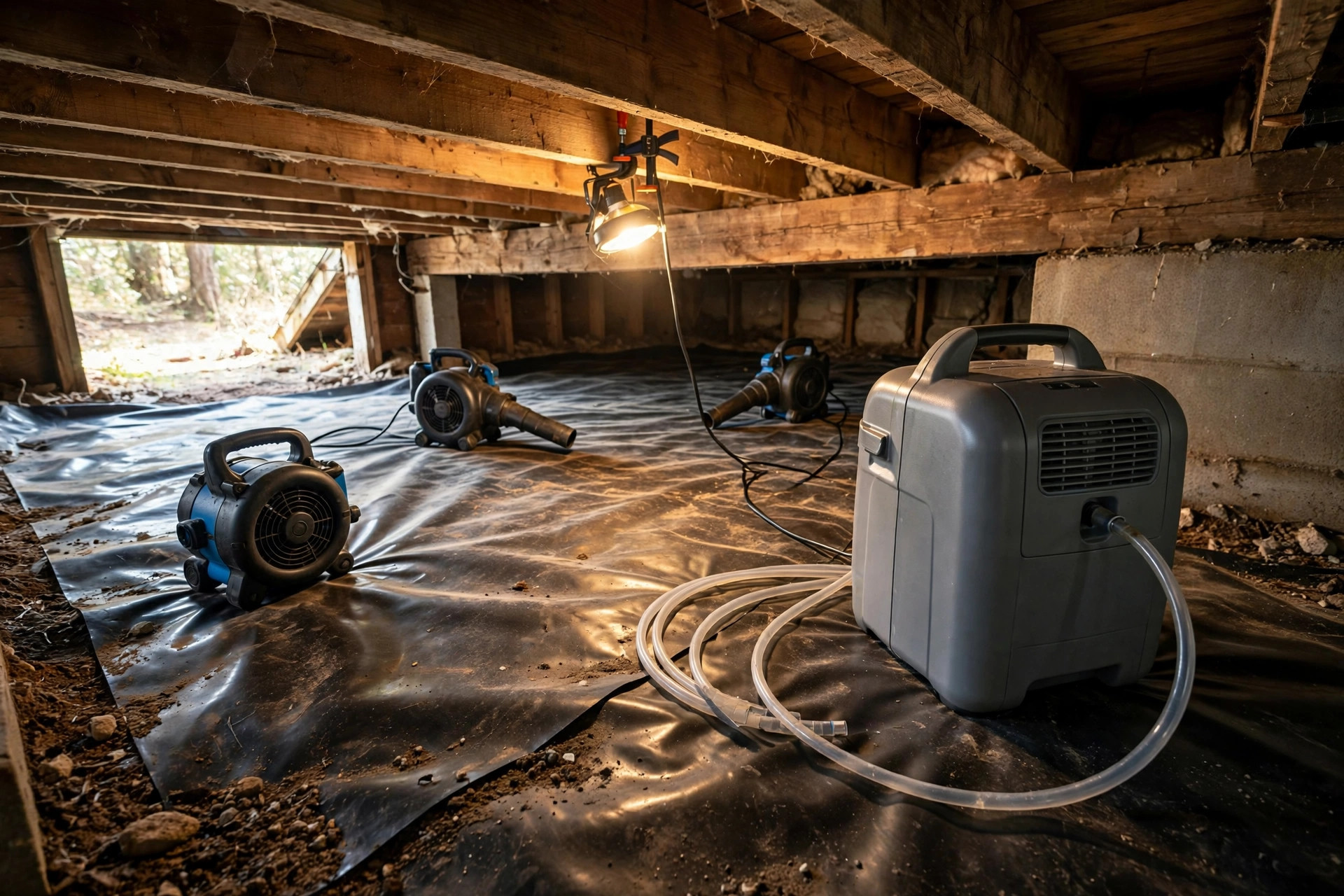
Framing, subfloor and concrete are dried with dehumidification sized to a below-grade space. In crawl spaces, the ground cover and vapor barrier are assessed and corrected where they are the moisture driver. Daily readings run to the verified dry standard - below-grade work trends longer, and the log is the proof.
The step other locations do not have. The sump pump and its discharge are tested, foundation entry points and interior drainage are checked, and humidity control is set to the EPA's range before the job closes. The findings become your prevention list.
The pump that exists for exactly this weather stops - power, switch or age - while ground water rises. The cruel timing is the definition of the failure.
After sustained rain, hydrostatic pressure pushes ground water through cracks and joints. Slow, recurring, and worst in finished basements, where it hides behind walls.
Water heaters, laundry rooms and bathrooms above send their failures down. The basement is the collection point for the whole house's plumbing.
Storm and flood entry through window wells, stairwells and doorways - Category 3 discipline from the flood damage cleanup page takes over.
The lowest fixtures in the home are a backup's entry points: basement toilets, tubs and floor drains first. Category 3, under the sewage backup cleanup safety order.
The entry paths are shared; almost everything else differs.
| Factor | Basement | Crawl Space |
|---|---|---|
| Access and working space | Open rooms - work proceeds at room pace | Confined, low clearance - slower, inspection-led work |
| What gets wet | Finished materials, contents, subfloor | Joists, subfloor from below, ground vapor |
| Drying method | Room drying with subfloor readings | Targeted airflow plus ground vapor control |
| The chronic risk | Finished-material loss in a single event | Hidden joist moisture and mold above a vapor source |
A basement floor can read dry at the surface while the subfloor and joists beneath it stay wet - the drying doctrine of readings over appearances applies with most force exactly where you cannot look. Ground vapor in a crawl space re-wets structure from below unless the ground cover and vapor barrier are intact; gaps are repaired and the correction is verified with readings over the following days.
Encapsulation - the sealed-barrier, humidity-controlled crawl space system - is named here honestly: it is the fuller answer for properties whose ground is a chronic moisture source, assessed by readings, and it is not a substitute for restoring an acute flood or plumbing loss. Some crawl spaces need it; many do not. The assessment, not the sales sheet, decides.
Because it has an entry path that was never closed. A basement that repeatedly takes water is not unlucky - it is undiagnosed.
Ranked by how often each explains the repeat: sump capacity that fails exactly in storm weather; foundation cracks admitting ground water under hydrostatic pressure; grading and gutters feeding the foundation wall from outside; and plumbing repaired at the visible fixture while the actual failure sat elsewhere. Each path has a fix class, and step five of the process exists to name yours before the job closes.
Extraction and removal happen on the first visits. Drying runs on the standard ranges with one honest adjustment: below-grade spaces trend to the longer side of them - cool surfaces, concrete, and subfloor assemblies dry slower than the rooms above them. The job ends at verified dry readings, including subfloor and joist checks. The gate is identical to every other page on this site; the road to it is longer downstairs.
Separate the structure from the finishes. The structure and framing: yes - extraction, removal of contaminated finishes and verified drying save them in most losses. The finishes divide by the canon: porous materials that absorbed Category 2 or 3 water are removed (carpet and pad, lower drywall, insulation), while hard surfaces and framing are cleaned and dried in place where readings verify. Sentimental contents are decided item by item, on the contents page's rules.
In order: standing water out, wet debris and failed insulation removed, targeted airflow and dehumidification placed for the space, the ground vapor cover corrected, and joist and subfloor readings verified over the following days. The deep section above is this answer at full length; the order does not change between the short version and the long one.
It depends on what the readings say the problem is. Encapsulation addresses chronic ground moisture - worth assessing when readings show the ground, not a one-time event, is the driver: repeat damp readings, musty odor from below, joist moisture that returns between events. It is not a substitute for restoring an acute loss, and it is not required for every crawl space. Assessment decides, and this page's loyalty is to the assessment.
24/7 emergency response, every day of the year
Local Buford team for Gwinnett and Hall counties
One team from mitigation to final restoration
Drying verified by moisture readings and moisture mapping
Documentation prepared for your insurance claim
Clear next steps and updates at every stage
Based in Buford (ZIPs 30515, 30518, 30519), serving Gwinnett and Hall counties. The full service-area treatment is on the homepage.
If your Buford home or business needs basement water damage restoration, one call starts the work today - (470) 516-0618.